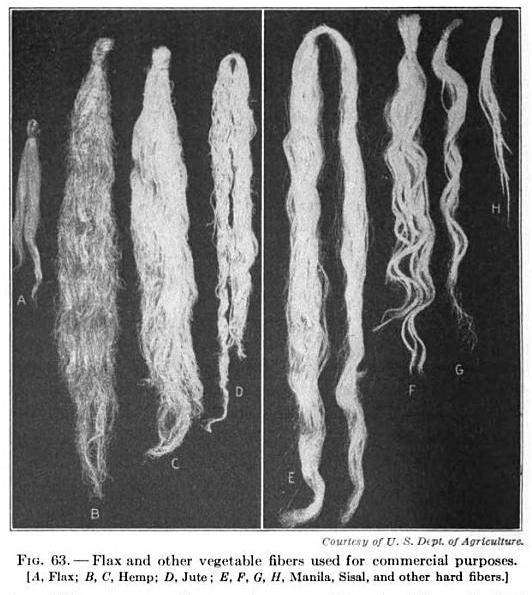
Hemp has accumulated a reputation as rough, scratchy, and slow to soften. That picture is partly accurate for unprocessed or coarsely spun hemp, but it does not describe what most Canadian textile retailers stock today. Modern hemp fabrics, particularly those processed with enzyme or mechanical finishing, behave noticeably differently from the industrial-grade material people often picture when the word comes up.
The Fiber Structure Behind Hemp's Initial Feel
Hemp fiber comes from the inner stalk of the Cannabis sativa plant. Unlike cotton, which grows as individual seed-hair fibers, hemp is a bast fiber — meaning it runs in bundles along the length of the stalk and must be separated through a retting process. The individual fiber strands are longer than cotton and stiffer, particularly near the nodes where the stalk branches.
This structural difference explains the initial hand feel. Hemp fabric at first touch is often described as similar to medium-weight linen — slightly rough, with a visible texture, and a tendency to feel stiff across the width of a flat panel. What changes with washing is the surface character of the fibers as the outer cuticle layer gradually relaxes.
What Washing Actually Does to Hemp
The softening of hemp fabric over repeated laundering follows a predictable pattern that differs from linen in one key respect: the change is more gradual. Linen softens meaningfully between wash one and wash five, and then continues more slowly. Hemp tends to remain quite similar to its initial feel through the first five washes and then softens more noticeably between wash five and twenty.
Washes 1–5
The fabric loses some surface stiffness and minor initial shrinkage occurs — typically around 2% in both warp and weft directions for well-processed hemp. The weave tightens slightly. Color, if the fabric is dyed, is most at risk of fading during this phase. Dark-colored hemp products should be washed separately.
Washes 6–15
Noticeable softening begins. The stiff, slightly papery quality that many buyers notice at first purchase starts to give way to a texture closer to mid-weight linen. The drape of the fabric changes — panels that held their shape stiffly begin to fall more loosely.
Washes 16–30
Hemp reaches what most users describe as its mature feel. The texture is still coarser than cotton percale of equivalent weight, but the roughness that some people find uncomfortable in new hemp is largely gone. The fabric at this stage is at or near peak breathability because the fiber structure has opened slightly without any loss of structural integrity.
Hemp Durability Compared to Linen and Cotton
Hemp is generally described as more durable than cotton and at least equivalent to linen in long-term wear resistance. The tensile strength of hemp fiber is significantly higher than cotton — often quoted at six to eight times stronger per equivalent unit — which translates to resistance to tearing and pilling under normal bedding use.
For upholstery applications, hemp's durability advantage is more pronounced. A hemp-blend upholstery fabric at 250–300 GSM resists abrasion better than most cotton-blend upholstery fabrics at equivalent weights. It is less common in Canadian upholstery supply than Europe, where hemp fabrics have been used in furnishing applications for longer, but availability is increasing through domestic specialty suppliers.
Fabric Weight Ranges for Hemp Textiles in Canada
Home textile grade hemp in Canada currently concentrates in a narrower weight range than linen. Most retailers and mills stock hemp fabric for bedding and upholstery between 180 and 220 GSM.
| GSM Range | Typical Application | Canadian Availability |
|---|---|---|
| 150–180 GSM | Lightweight shirting, pillowcases | Limited; primarily available through Contrado.ca and Simplifi Fabric |
| 180–220 GSM | Bedding, curtains, light upholstery | Most commonly stocked range by Canadian suppliers |
| 220–300 GSM | Heavy upholstery, floor coverings | Sparse; often requires direct mill order or European import |
Gordon Fabrics in Ontario lists their hemp fabric — marketed as "Grace" — at 205 GSM and offers it in multiple colorways including natural linen tones and darker dyed options. Simplifi Fabric in British Columbia carries Oeko-Tex certified hemp fabric and ships free within Canada on orders over $250.
Care Instructions for Hemp Textiles
Hemp care is straightforward and tolerates a wider temperature range than linen before problems appear. The following applies to most woven hemp home textiles.
Washing
- Cold or warm water, up to 40°C. Hemp does not deteriorate as quickly as linen at slightly higher temperatures, but consistently hot washing will accelerate fading.
- Gentle cycle. Hemp's density means it holds water and tumbles heavily in the drum — a gentler cycle reduces mechanical abrasion.
- Standard or mild detergent in normal quantities. Hemp is less sensitive to detergent residue than linen, though mild is still preferable.
- Avoid bleach. Hemp fiber can yellow under chlorine bleach, and oxygen bleach, while less damaging, will gradually weaken the weave at the fiber junctions.
- Wash dark colors separately. Hemp is not colorfast in the first several washes.
Drying
- Air drying is preferred. Hemp dries faster than linen at equivalent GSM because the fiber structure is more open.
- Tumble drying on low heat works well. Hemp is less prone to deep creasing in the dryer than linen.
- Do not over-dry. Fully dried hemp can develop a stiff hand that requires ironing to recover.
Hemp and Mold Resistance
One frequently mentioned property of hemp — mold and mildew resistance — is relevant for upholstery and window treatments in Canadian climates with high humidity, particularly in basement rooms or properties near water. The natural antimicrobial properties of hemp fiber make it less hospitable to mold growth than cotton at equivalent moisture levels.
This does not mean hemp fabric is immune to mold. If left wet for extended periods in a dark, unventilated space, hemp will develop mold growth. The resistance matters at the margins — in conditions where cotton fabric would develop mold in two to three days, hemp may take significantly longer. For bathroom window treatments or basement upholstery in humid climates, this is a meaningful difference.
On blended hemp fabrics: Many "hemp" products in Canada are hemp-cotton blends, typically 55% hemp / 45% cotton. These blends soften faster than pure hemp and feel closer to cotton from the first wash. The durability and mold-resistance benefits of hemp are reduced proportionally. If those properties are the reason for the purchase, check the fiber content label before buying.
Canadian Suppliers for Hemp Home Textiles
The domestic supply of pure hemp home textile fabric in Canada remains more limited than linen. The following suppliers stock home-grade hemp and operate with Canadian shipping:
- Simplifi Fabric (BC): Carries organically processed hemp certified under Oeko-Tex Standard 100. Free shipping within Canada on orders over $250. Stocks multiple widths.
- Gordon Fabrics (ON): Stocks a 205 GSM pure hemp plain weave ("Grace") in multiple colorways. Available in metre increments.
- Contrado.ca: Offers custom-printed hemp plain weave fabric, suitable for upholstery and home textile projects. Priced per metre with Canadian shipping.
For bedding applications specifically — sheets, pillowcases, duvet covers — finished hemp products are easier to find through Canadian linen retailers than raw fabric is through textile suppliers. The linen weight guide covers how to compare weight labels across different natural fibers, which applies equally to hemp bedding purchases.